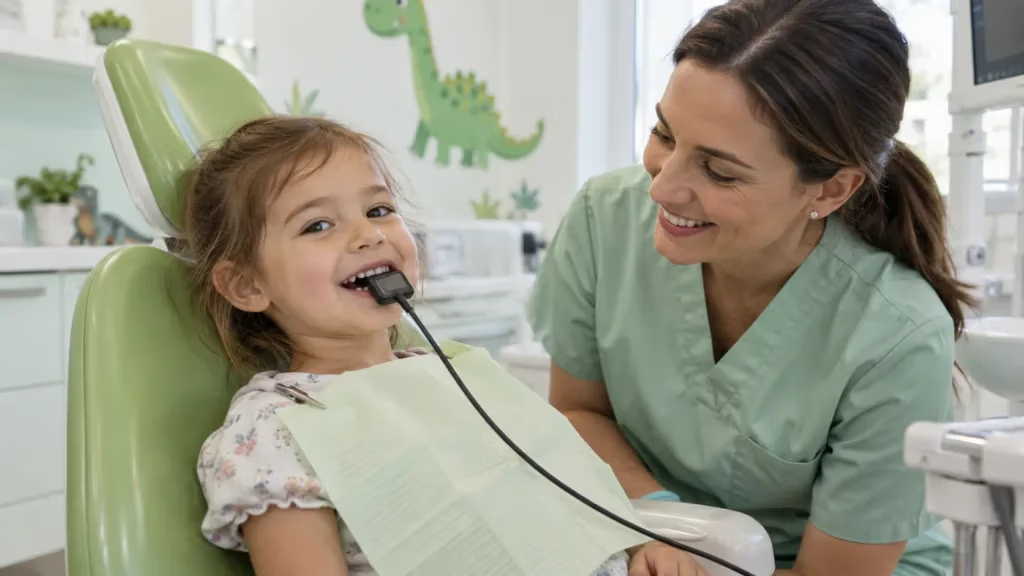
Parents often ask two things about dental X-rays: “Does my child really need them?” and “Will my toddler sit still for it?” Here is how pediatric dentists decide when an X-ray is worth taking, and how to make the first one easy.
🔎 X-rays are prescribed, not scheduled
The American Academy of Pediatric Dentistry (AAPD) and the American Dental Association (ADA) agree: there is no “routine” X-ray on a calendar. A dentist first examines your child, reviews their history and cavity risk, and only then decides whether an image would change the care plan.
Rule of thumb: if the dentist can see everything they need with a mirror and light, no X-ray is taken.
👶 By age: what to expect
- Babies and young toddlers (0–2): X-rays are uncommon. They are considered only for a specific concern, such as an injury, swelling, or a tooth that is not coming in as expected.
- Preschoolers (3–5): Once the back baby teeth touch each other, the dentist can no longer see between them. A small bitewing image may be recommended to check for cavities hiding in those contact areas.
- School-age kids (6–12): As adult teeth arrive, an image may help track eruption, spot missing or extra teeth, and plan for orthodontics.
- Teens: Bitewings continue based on cavity risk, and a panoramic image is often taken once to check wisdom teeth and jaw development.
📅 How often? It depends on cavity risk
- Higher risk (previous cavities, frequent snacks or sweet drinks, enamel defects, limited brushing): check-up bitewings about every 6–12 months.
- Lower risk (no cavities, good home care, fluoride use): about every 12–24 months, or longer if the dentist can see between the teeth.
Risk changes as children grow, so the interval is reviewed at each visit rather than fixed.
🛡️ Keeping the dose low
Modern digital sensors need a fraction of the radiation older film required, and pediatric offices use child-size settings and a tightly focused beam. Dentists follow the ALARA principle (As Low As Reasonably Achievable): every image must have a clear purpose. Your dental team can explain the shielding they use and why, based on current ADA guidance.
😊 Preparing a toddler for a first X-ray
- Keep it playful: call it “taking a picture of your teeth.” Avoid words like “shot” or “ray.”
- Practice at home: have your child bite gently on a folded washcloth for a few seconds, then “say cheese.”
- Let them watch first: many kids relax after seeing a parent or sibling do it.
- Timing matters: book after a nap and a snack, not right before one.
- It is fine to stop: if a child cannot hold still, the team will simply try another day. Nothing is forced.
💬 Good questions to ask the dentist
- What are you looking for with this image, and what happens if we wait?
- Which type of X-ray is it, and how long does it take?
- When would you expect to take the next one?
☎️ Talk to us about your child’s X-rays
Contact Little Kids Dentistry with any questions, read our overview of the types of dental X-rays and their safety, or browse more Toddlers articles in Smile Academy.
📚 Sources
Based on the AAPD’s Prescribing Dental Radiographs for Infants, Children, Adolescents, and Individuals with Special Health Care Needs and the ADA/FDA recommendations on dental radiographic examinations. This article is general information and does not replace an examination by your child’s dentist.