A Parent’s Guide to Fear-Free Dentistry in Los Angeles
Your child’s 6-month check-up is on the calendar, and your stomach already hurts.
You’re picturing the tears. The negotiations. The flat-out refusal to open their mouth. You’re bracing for the stress of the visit and the wave of guilt afterward. As a parent, there is nothing worse than seeing your child truly terrified, especially when you know it’s for their own health.
You are not alone.
Many parents in our busy Los Angeles community, especially those living and working near the USC campus, come to our clinic with this exact problem. They know their child’s dental health is vital, but they are terrified of causing their child emotional trauma just to get a cleaning or fill a cavity.
What if the visit could be calm? What if your child could be relaxed, cooperative, and even a little sleepy? What if they could get the care they need and leave the office with no bad memories of the appointment?
This is not a fantasy. This is the reality of modern pediatric sedation dentistry.
As your local pediatric dentist near USC Los Angeles, we want to pull back the curtain on this safe, gentle, and incredibly effective option. This guide will walk you through what sedation dentistry is, why it’s so safe, and how it is transforming dental visits for anxious children from a battle into a breeze.
1. “My Child is Terrified of the Dentist” – Understanding Dental Anxiety
First, let’s get one thing straight: if your child is scared of the dentist, it is not your fault.
Dental anxiety, or “odontophobia,” is one of the most common fears in both children and adults. For a child, a dental office is a strange new world filled with unfamiliar sights, sounds, and sensations. Their fear is a natural reaction.
Why Are Kids So Scared?
Understanding the why can help you find the right solution. Common causes include:
- Fear of the Unknown: This is the biggest one. Strange chairs, bright lights, new faces in masks, and unusual noises can be overwhelming for a young child.
- Sensory Overload: The smell of a dental clinic, the sound of the tools, and the physical sensation of lying back in the chair can be too much for sensitive children.
- A Previous Bad Experience: A single difficult visit—perhaps at a non-pediatric office that wasn’t equipped for kids—can create a lasting phobia that is difficult to undo.
- Transmitted Anxiety: Kids are incredibly perceptive. If you are nervous about the dentist, they will pick up on your anxiety, even if you try to hide it.
When “Nervous” Becomes a “Phobia”
There’s a big difference between a child who is a little “nervous” and a child who has a genuine “phobia.” We can often help a nervous child through a visit with play, “Tell-Show-Do” techniques, and simple distraction.
But for a child with a true phobia, the fear itself is a barrier to care.
The biggest risk of severe dental anxiety isn’t the fear itself—it’s the avoidance it causes. When routine check-ups and cleanings become impossible, small, preventable issues (like a tiny cavity) are missed. They grow quietly until they become a large, painful, and costly dental emergency, often requiring even more invasive treatment.
Addressing the fear is a critical part of your child’s healthcare.
2. What is Pediatric Sedation Dentistry? A Gentle Solution for Fear-Free Visits
This is where sedation dentistry comes in.
It’s crucial to understand that pediatric sedation isn’t about “knocking kids out” just to “get the work done.” That’s a common misconception.
Redefining the Dental Visit
The primary goal of sedation dentistry is to lower anxiety and create a state of deep relaxation so the child feels calm and safe. The child is still able to breathe on their own and, with most forms, is still conscious and able to respond to the dentist.
It simply allows us to separate the child from their fear. This allows our pediatric specialists to perform their work safely, efficiently, and thoroughly, often completing multiple procedures in a single, stress-free visit.
The Long-Term Benefit: Breaking the Cycle of Fear
Here is the most important part: sedation helps break the cycle of dental anxiety.
When a child undergoes a procedure with sedation, they often have little to no memory of the dental work itself. Their memory of the visit is one of feeling sleepy and comfortable. They don’t form new traumatic memories.
This creates a positive foundation. The next time they need to visit, their anxiety is often significantly lower. Over time, we can sometimes transition these children from needing sedation to being able to have a normal, happy visit with just our behavioral techniques.
Who is a Good Candidate for Sedation?
We may recommend sedation for children who:
- Have high, persistent, or unmanageable levels of anxiety or phobia.
- Need long, complex, or multiple dental procedures in one sitting.
- Have a very strong or sensitive gag reflex that makes work impossible.
- Are very young and unable to sit still long enough for safe treatment.
- Have special healthcare needs that make the dental environment overwhelming.
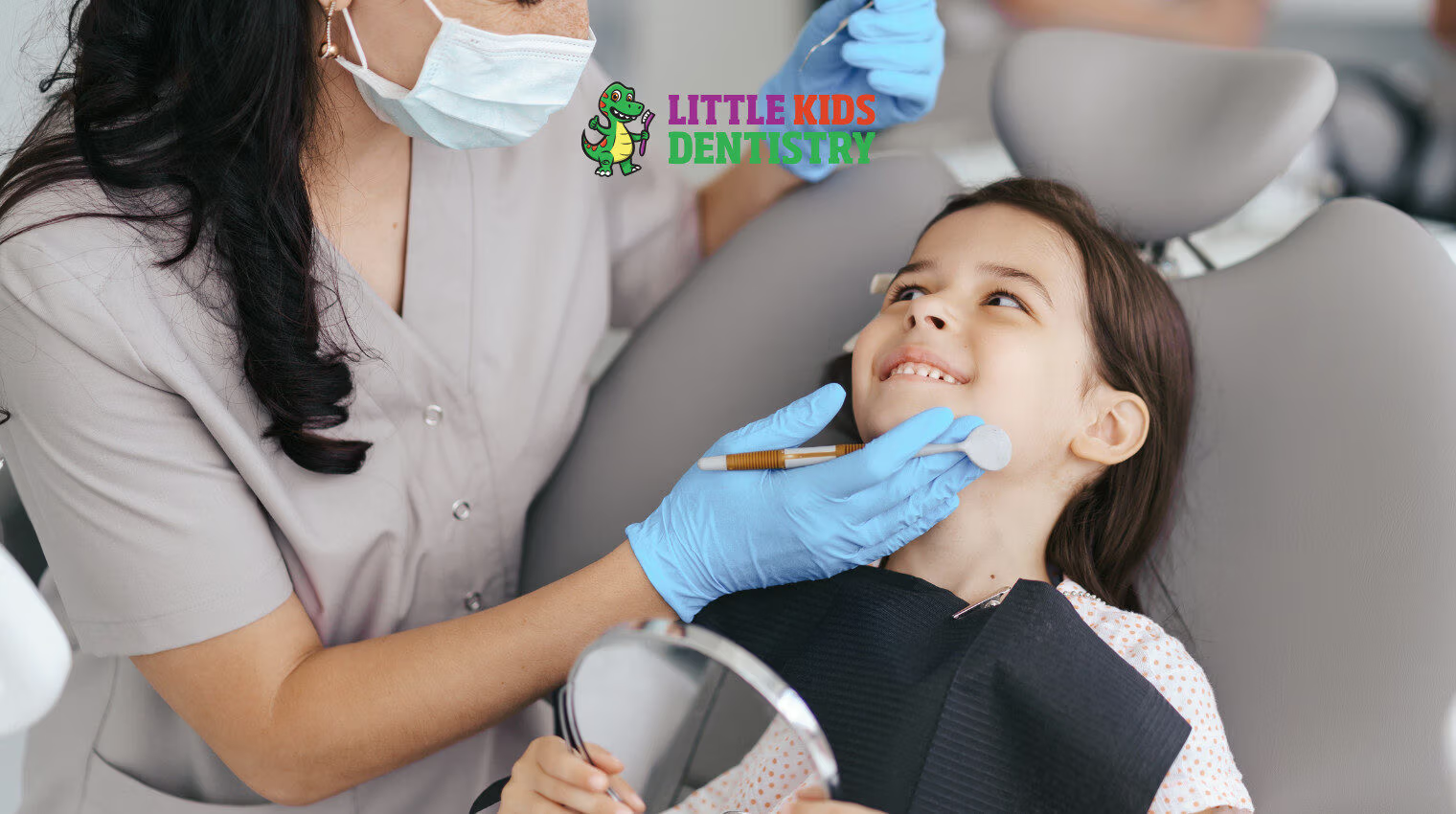
Image: A compassionate pediatric dentist or dental assistant holding a child’s hand to provide comfort in the dental chair.
3. Is Sedation Dentistry Safe? (Answering Your Most Important Question)
This is the first—and most important—question every parent asks. As a parent, you’re being asked to put your child’s well-being in our hands in a new way, and you deserve a clear, confident answer.
The answer is: Yes, pediatric sedation dentistry is extremely safe when it is administered by a trained, qualified pediatric dentist and team in a properly equipped setting.
The Pediatric Specialist Difference
A general dentist can get a certificate to perform sedation. A pediatric dentist completes an additional 2-3 years of specialty residency training after dental school. A huge portion of this training is dedicated specifically to the art and science of safely sedating children.
This specialized training includes:
- Advanced Pharmacology: Understanding how medications affect a child’s growing body differently than an adult’s.
- Airway Management: Specialized training in protecting and managing a child’s smaller, more delicate airway.
- Emergency Protocols: Rigorous, hospital-based training to handle any potential complication with expertise and calm.
The American Academy of Pediatric Dentistry (AAPD) sets comprehensive guidelines for pediatric sedation, and our practice adheres to these standards without exception.
Constant, Advanced Monitoring
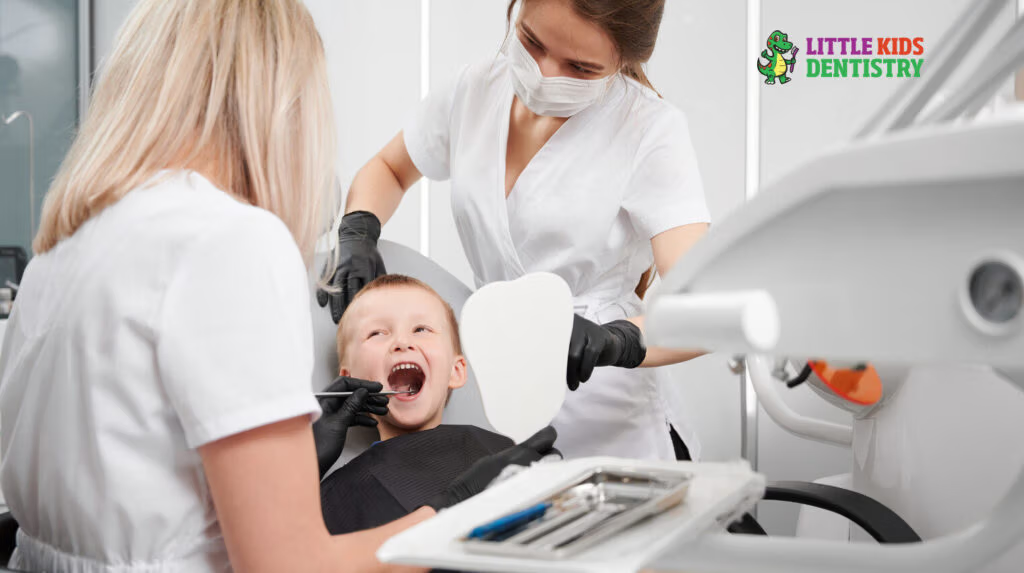
During sedation, your child is never left alone. They are continuously monitored by our highly trained team from the moment the medication is administered until they are safely discharged to you. We use advanced medical monitoring equipment to track their heart rate, breathing, oxygen levels, and other vital signs throughout the entire process.
Your child’s safety is, and always will be, our number one priority. Safety comes from training and trust. Our entire team has a deep commitment to the highest standards of care. We invite you to learn About Us and the credentials of our dedicated pediatric specialists who have built their careers around caring for children just like yours.
4. From “Laughing Gas” to Deeper Comfort: Sedation Levels We Offer
“Sedation” isn’t a one-size-fits-all term. We tailor the approach to your child’s specific anxiety level, health history, and the dental work they need. The two most common forms are Nitrous Oxide and Oral Conscious Sedation.
Level 1: Nitrous Oxide (“Laughing Gas”)
This is the mildest, most common, and safest form of sedation. It’s a sweet-smelling gas (a mix of nitrous oxide and pure oxygen) that your child breathes through a small, comfortable nose mask.
- What it Feels Like: It does not make your child laugh or “go to sleep.” It simply creates a tingly, “floaty,” and deeply relaxed feeling. It takes the “edge” off their anxiety and often makes them giggle.
- The Child’s State: Your child is fully awake, can talk, and can follow our instructions.
- Best For: Mild to moderate anxiety, a slight gag reflex, or just helping a “worried” child relax for a new procedure.
- Key Benefit: The biggest benefit is that it wears off immediately. Within 2-3 minutes of breathing pure oxygen, the nitrous oxide is completely out of their system, and they can go right back to school or play.
Level 2: Oral Conscious Sedation
This involves your child drinking a small amount of liquid medication (like a syrup) in our office before their appointment.
- What it Feels Like: Over the next 30-60 minutes, your child will become very groggy, sleepy, and deeply relaxed, as if they are about to drift off for a nap.
- The Child’s State: They are still conscious and can respond to us, but they will be much less aware of the procedure and what is happening.
- Best For: Higher levels of anxiety, longer procedures, younger children who can’t cooperate, or children with a strong gag reflex.
- Key Benefit: Most children have little to no memory of the dental work afterward. This is a massive win, as it prevents them from forming new, scary memories associated with the dentist.
H2: 5. Why Trust a Specialist? Choosing Your Kids Dentist on Hoover St LA
True pediatric dental care isn’t just about the medicine; it’s about the entire experience.
H3: Beyond the Degree: An Environment Built for Kids
A specialist kids dentist on Hoover St LA doesn’t just have extra training; we have a completely different philosophy. Our clinic doesn’t look, sound, or smell like a typical adult dental office. It’s designed to be disarming and fun from the moment you walk in.
Our team members are experts in behavioral guidance techniques. We use a “Tell-Show-Do” method (where we explain a tool in kid-friendly terms, show it to them, then gently use it) and constant positive reinforcement. For many kids, this approach is all they need. Sedation is just one tool in our toolbox, not our only one.
Convenient, Trusted Care for Busy LA Families
We know that life for families near USC, Exposition Park, and the 90037 area is non-stop. You’re balancing work, school, and a dozen other activities. You need a trusted partner you can get to easily, without fighting cross-town traffic.
Our clinic is right in your neighborhood, built to serve the families of our community. We are proud to be your local resource for compassionate, specialized care. We invite you to check our Hoover St. [Location] page for directions, office hours, and a peek inside our kid-friendly office.
A Positive Dental Visit is Possible for Your Child
Your child’s dental anxiety is real, and it’s valid. But it doesn’t have to be a permanent barrier to a healthy, confident smile.
From mild “laughing gas” for a simple case of nerves to safe, conscious sedation for more complex needs, there are gentle, effective options available.
As a leading pediatric dentist near USC Los Angeles, our team believes our most important job is to care for the whole child, not just their teeth. That means protecting their emotional well-being is just as important as fixing a cavity. A positive, non-traumatic experience today builds a healthy, confident dental patient for life.
A Fear-Free Visit is Just a Phone Call Away
Stop dreading the dentist. Let us show you how a calm, gentle, and positive dental visit can change your child’s life (and yours!). Our compassionate team is located at 4203 S Hoover St, Los Angeles, CA 90037, just a short drive from the USC campus and easily accessible for our LA families.
[Contact Us] today to schedule a consultation. We’ll sit down with you, listen to your concerns, answer every one of your questions, and create a personalized, positive, and stress-free dental plan for your child.
Your Questions About Pediatric Sedation Answered
Does your child experience dental anxiety? Share your story or questions in the comments below. We’re here to help our community.