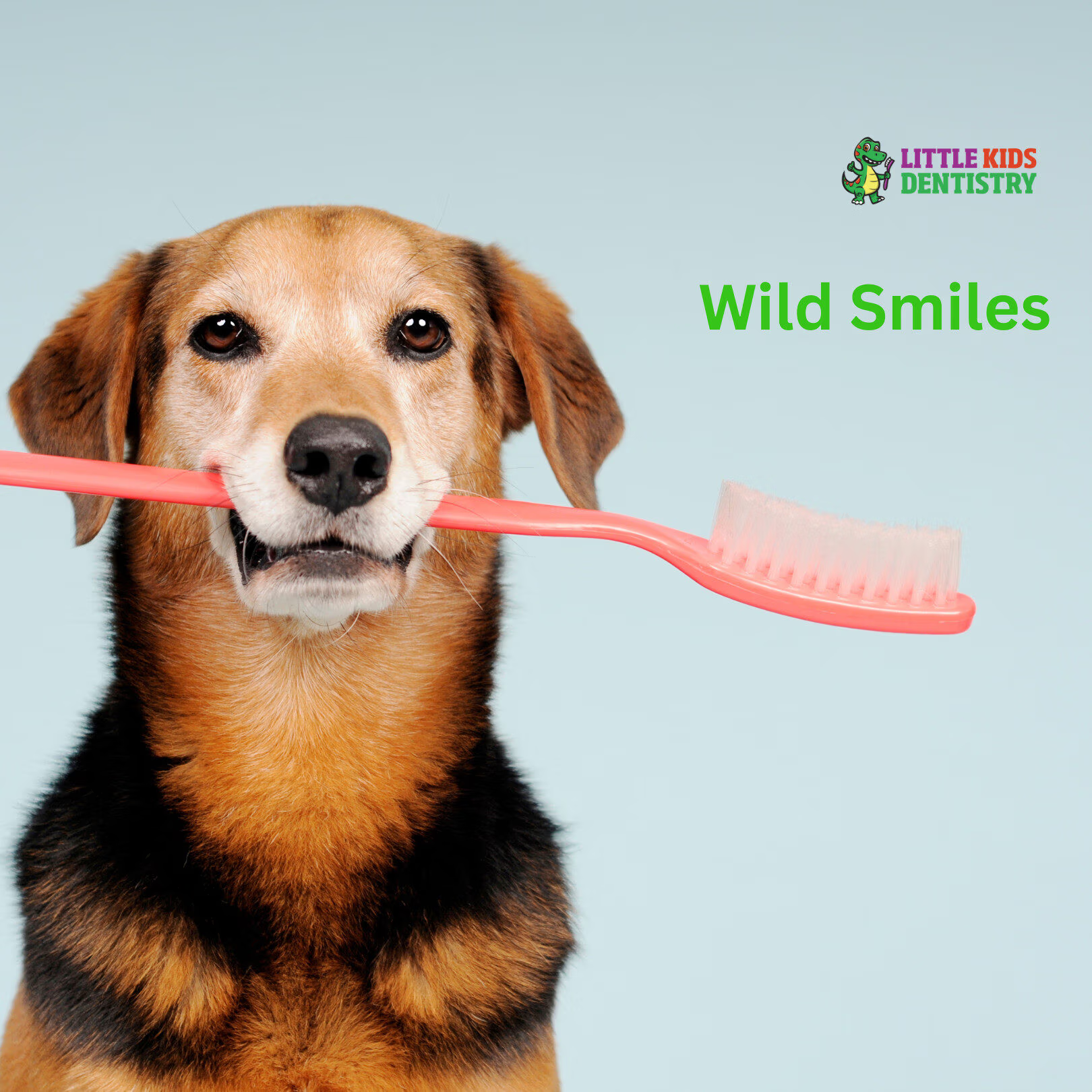
When you think about teeth, you probably imagine brushing twice a day, flossing, and visiting a dentist near me. But what if we told you that nature has designed some of the most incredible, powerful, and unusual teeth in the animal kingdom? From sharks that grow thousands of teeth in a lifetime to elephants whose tusks are actually teeth, the animal world has a lot to teach us about dental survival.
In this blog, we’ll explore 10 fascinating facts about animal teeth—and even discover some healthy teeth tips inspired by wildlife.
1. Sharks Never Run Out of Teeth 🦈
Sharks are famous for their terrifying smiles, but did you know they can grow and lose up to 30,000 teeth in a lifetime? Their teeth are arranged in rows like a conveyor belt. When one tooth falls out, another quickly replaces it.
👉 Unlike sharks, humans only get two sets of teeth: baby and adult. That’s why oral hygiene habits matter so much—once adult teeth are gone, they’re gone for good.
2. Beavers Brush with Nature 🦫
Beaver teeth are bright orange—not because they don’t brush, but because they’re coated in iron! This makes their teeth incredibly strong, perfect for gnawing down trees. Their constant chewing also keeps their teeth from overgrowing.
👉 Humans don’t have iron-coated teeth, but we can strengthen enamel with fluoride toothpaste and a healthy diet.
3. Elephants’ Tusks Are Actually Teeth 🐘
Those giant ivory tusks you see on elephants are elongated incisors. Elephants use them to dig for water, strip bark from trees, and even defend themselves. As they age, elephants replace their molars up to six times, but once the last set wears out, they struggle to eat.
👉 For us, molars are essential too—chewing food properly helps digestion and overall health.
4. Snails Have the Most Teeth in the World 🐌
It might surprise you, but snails have more teeth than any other animal—up to 25,000 tiny teeth! They’re arranged on a tongue-like organ called a radula, which scrapes food into the snail’s mouth.
👉 Thankfully, we don’t need that many. With just 32 adult teeth, we can eat everything we need—as long as we practice best dental care.
5. Crocodiles Have a Dentist Bird 🐊🐦
Crocodiles are fierce predators, but even they need dental care. In the wild, small birds called “Egyptian plovers” pick leftover meat out of crocodile teeth. This unlikely partnership keeps the croc’s mouth clean and healthy.
👉 Humans don’t get dentist birds, but that’s what flossing is for—removing food particles before bacteria cause cavities.
6. Rodents’ Teeth Never Stop Growing 🐭
Mice, rats, and squirrels have teeth that grow continuously. That’s why they’re always chewing—on wood, nuts, or even wires. Constant gnawing keeps their teeth from getting too long.
👉 While our teeth stop growing, they can wear down or get damaged. Regular checkups with a dentist near me prevent small problems from becoming big ones.
7. Dolphins Only Get One Set of Teeth 🐬
Unlike sharks, dolphins are stuck with the teeth they’re born with. Once they lose one, it’s gone forever. They also don’t chew—dolphins swallow fish whole! Their teeth are mainly for gripping, not grinding.
👉 Humans need teeth for chewing, speaking, and smiling—so taking care of them is non-negotiable.
8. Hippos Use Their Teeth for Show, Not Chewing 🦛
Hippos have massive tusk-like canines that can grow over a foot long. But surprisingly, they don’t use them for eating! Instead, hippos graze on grass with their molars. Their giant teeth are mainly for fighting and showing dominance.
👉 While we don’t need to scare rivals with our teeth, a bright, confident smile is powerful in its own way.
9. Giraffes Have No Upper Front Teeth 🦒
If you’ve ever seen a giraffe eat leaves, you might notice something strange—they have no upper front teeth. Instead, they use a long, prehensile tongue (up to 20 inches!) to strip leaves, then grind them with molars in the back.
👉 Humans rely on all our teeth to chew a variety of foods—so losing even a few can make eating much harder.
10. Narwhal “Unicorn Horns” Are Giant Teeth 🐋
That spiral horn on a narwhal isn’t a horn at all—it’s a tooth! The tusk can grow up to 10 feet long and is filled with nerves, making it super sensitive. Scientists believe narwhals use it to sense changes in the environment and to impress potential mates.
👉 Our teeth may not be 10 feet long, but they’re sensitive too. That’s why tooth sensitivity treatments are so important if enamel gets worn down.
What Humans Can Learn from Animal Teeth
The animal kingdom shows us that teeth are more than tools for eating—they’re for survival, defense, communication, and even beauty. While humans may not grow thousands of teeth like sharks or glow orange like beavers, we can still learn valuable lessons:
- Replace what you can’t regrow: Sharks replace teeth constantly, but humans only get two sets. Protect your adult teeth with strong oral hygiene habits.
- Diet matters: Beavers’ strong teeth come from constant chewing. For us, crunchy fruits and vegetables naturally clean teeth and strengthen gums.
- Partnership helps: Just like crocodiles need birds, humans need dentists. Regular visits keep smiles healthy.
- Teeth show health: From elephants to narwhals, teeth reveal an animal’s age and condition—just like ours do.
Final Thoughts
Animal teeth are weird, wild, and wonderful. They remind us that teeth are more than just part of a smile—they’re tools of survival. For humans, the lesson is clear: while we may not grow 30,000 teeth like sharks, we can keep the 32 we have healthy with daily brushing, flossing, smart eating, and regular checkups.
So next time you visit your dentist near me, remember—you’re not just caring for your smile. You’re caring for one of the most fascinating features in the animal kingdom!