Dinosaurs are exciting for children.
Dinosaurs are exciting for children. They were huge, powerful, mysterious, and very different from the animals we see today. But one of the most interesting things about dinosaurs is something many kids already know well: teeth.
Some dinosaurs had sharp teeth. Some had flat teeth. Some had hundreds of teeth, while others had very few. Dinosaur teeth were not all the same because different dinosaurs ate different foods. Just like animals today, their teeth were designed for the way they lived and ate.
Learning about dinosaur teeth can be a fun way to teach children why their own teeth are important too.
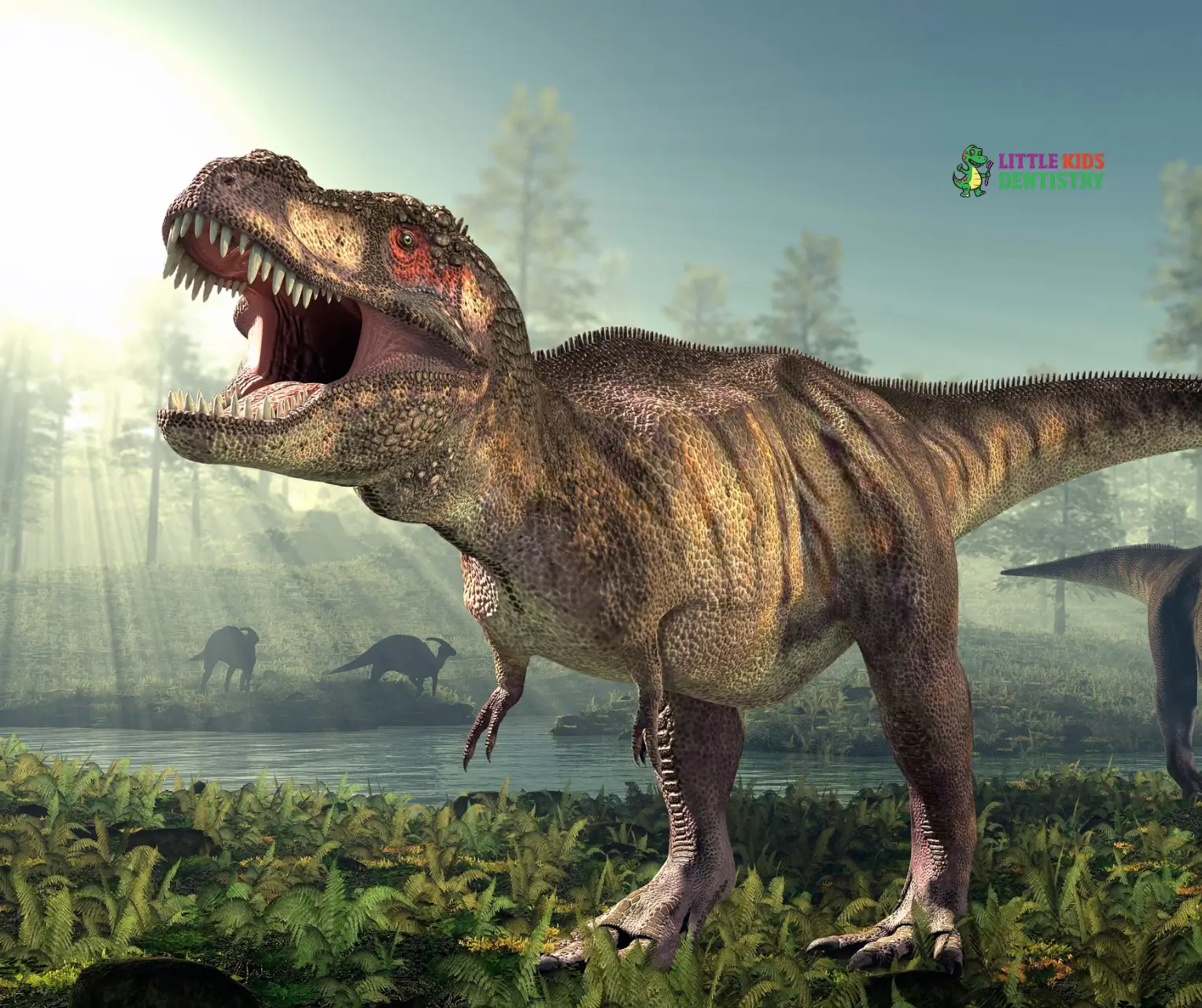
One of the most famous dinosaurs is the Tyrannosaurus rex, often called T. rex.
This dinosaur had large, sharp teeth that could be as long as bananas. Its teeth were made for biting and tearing food. T. rex was a meat-eating dinosaur, so it needed strong teeth to help it eat. Its teeth were not made for chewing like human teeth. Instead, they helped it grab and tear.
This can help kids understand that different teeth have different jobs. Humans have front teeth for biting, canine teeth for tearing, and back teeth for chewing. Every tooth in the mouth has a purpose. That is why it is important to brush all teeth, not just the front ones that show when we smile.
Another interesting dinosaur is the Triceratops.
Unlike T. rex, Triceratops ate plants. It had teeth that worked more like scissors or grinders. These teeth helped it cut and chew tough plants. Since plants can be rough and hard to break down, Triceratops needed strong teeth to eat every day.
This teaches children an important lesson: teeth help us enjoy healthy food. If teeth hurt or have cavities, eating can become uncomfortable. Kids may avoid crunchy fruits, vegetables, or other foods that are good for their bodies. Healthy teeth help children chew properly and enjoy a balanced diet.
Some dinosaurs had many teeth that were replaced throughout their lives.
For example, certain plant-eating dinosaurs constantly grew new teeth as old ones wore down. Their teeth worked very hard every day, so nature gave them replacements.
Humans are different. Children get baby teeth first, and later those teeth are replaced by adult teeth. But after adult teeth come in, we do not keep growing new ones like some dinosaurs did. That means taking care of teeth is very important. Brushing, flossing, drinking water, and visiting the dentist help protect the teeth children have now and the adult teeth they will need for life.
Dinosaur teeth also help scientists learn about the past.
By studying fossil teeth, scientists can understand what a dinosaur ate, how it lived, and even how it may have hunted or chewed. Teeth can tell a story, even millions of years later.
Children’s teeth tell a story too. A dentist can look at a child’s teeth and understand many things: how well they are brushing, whether cavities are starting, if the bite is developing normally, or if baby teeth are falling out at the right time. Regular dental checkups help catch small problems before they become big ones.
Parents can use dinosaurs to make brushing more fun at home. For example, children can pretend they are brushing like a T. rex protecting its strong teeth or opening wide like a Triceratops. Parents can say, “Let’s clean your dinosaur teeth!” or “Let’s chase away the cavity bugs before bedtime.” Turning brushing into a game can make children more interested and less resistant.
It is also helpful to remind kids that even the strongest teeth need care. A dinosaur might have had powerful teeth, but children need clean teeth to stay healthy. Food and sugar can stick to teeth during the day. If teeth are not brushed, bacteria can create acid that causes cavities. Brushing twice a day helps keep the smile strong.
A dinosaur-themed dental routine can be simple. Choose a fun toothbrush, play a short dinosaur song for two minutes, and let the child roar after brushing is done. Small playful habits can make a big difference, especially for younger children who are still learning.
Dinosaurs may be gone, but their teeth still teach us something valuable. Teeth help us eat, grow, speak, and smile. Whether it is the sharp teeth of a T. rex or the strong chewing teeth of a Triceratops, every tooth had a job.
Children’s teeth have important jobs too. With daily brushing, healthy food choices, and regular dental visits, kids can keep their smiles strong — maybe not dinosaur strong, but strong enough for a lifetime of happy, healthy smiles.