If you’re like most parents, you probably have a few sippy cups scattered around your home, in your diaper bag, or under the car seat. They’re convenient, spill-proof, and make life with a toddler a little easier. But many parents eventually start asking the same important question:
“Are sippy cups actually good for my child’s teeth?”
As pediatric dentists, we get this question every single week—and the truth is more nuanced than you might think. Sippy cups aren’t “bad,” but using them the wrong way or for too long can affect everything from your child’s teeth to their speech development.
This blog will help you understand the difference between sippy cups and open cups so you can make informed, confident choices for your child’s growing smile.
How Sippy Cups Affect a Child’s Teeth
Sippy Cups Were Built for Convenience
Sippy cups were invented to stop spills (and save parents’ sanity). But they were never designed with dental or oral development in mind.
A hard spout encourages toddlers to:
- Push their tongue forward
- Use a sucking motion instead of proper swallowing
- Hold liquids in the mouth longer
This may not seem like a big deal, but over time it can influence dental development and speech.
The Connection Between Sippy Cups and Cavities
Here’s the real concern: prolonged sipping of sugary drinks.
Toddlers often walk around with a sippy cup for hours, taking little sips of:
- Milk
- Juice
- Sweetened drinks
This constant exposure keeps sugar on the teeth, allowing harmful bacteria to produce acids that cause cavities.
Evidence Placeholder:
Insert ADA statistic on early childhood caries caused by frequent sugar exposure.
Jaw, Bite, and Speech Development
The rigid spout of a sippy cup redirects the tongue and encourages an unnatural swallow pattern. Over time, this can contribute to:
- Tongue thrust
- Improper bite development
- Minor jaw alignment issues
- Slower speech progress
These issues don’t happen to every child—but the risks increase with long-term or daily use.
When Sippy Cups Are Still OK
Don’t worry—this doesn’t mean you need to throw your sippy cups away.
Sippy cups are safe when:
- Used occasionally
- Filled only with water
- Used primarily during travel or car rides
Just avoid letting your child sip milk or juice throughout the day.
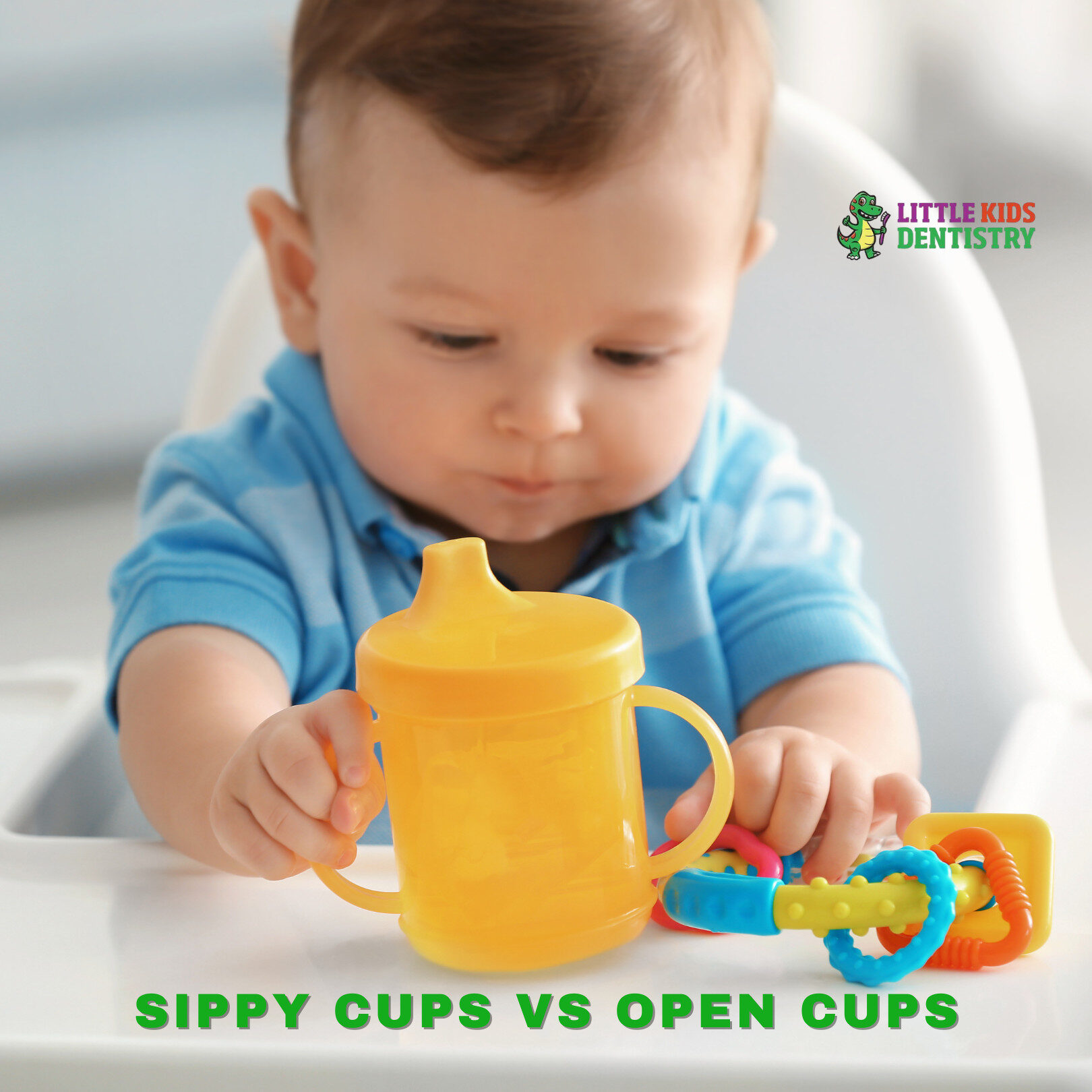
Image Placeholder — Alt text: “Toddler drinking from a sippy cup and open cup.”
Benefits of Open Cups for Your Child’s Oral Development
Supports Natural tongue, jaw, and mouth movement
Open cups encourage your child to:
- Move their tongue in a natural up-and-back pattern
- Strengthen their lips
- Learn proper swallowing patterns
These small daily habits support healthier oral development over time.
Less Risk of Cavities
Drinking from an open cup naturally limits continuous sipping. Your child drinks their beverage in shorter sessions instead of carrying it around all day.
This reduces sugar exposure and lowers cavity risk.
Better for Speech Development
Speech-language pathologists often recommend open cups because they promote:
- Stronger oral muscles
- Better breathing patterns
- Improved tongue movement
- Better control of sounds
Evidence Placeholder:
Insert quote or reference from pediatric speech therapist regarding oral development.
Creates Healthy Lifelong Habits
Children who use open cups early tend to:
- Stay hydrated
- Drink more water
- Develop safer, healthier drinking habits
Video Placeholder — Alt text: “Mom helping toddler practice safe open-cup drinking.”
Transitioning from Sippy Cups to Open Cups: A Parent-Friendly Guide
How to Know Your Child Is Ready
Most children can begin practicing with open cups around 6–12 months, but every child is unique. Your toddler may be ready if they can:
- Sit independently
- Bring objects to their mouth
- Show interest in your cup
A Simple Step-by-Step Transition Plan
Step 1: Start During Mealtimes
Use tiny amounts of water and let your child practice in a highchair.
Step 2: Let Sippy Cups Hold Water Only
Milk and juice go in open cups at the table.
Step 3: Introduce Straw Cups
These are a great bridge between sippy and open cups.
Step 4: Reduce Access to Sippy Cups at Home
Keep them only for going out.
Step 5: Model Drinking from Open Cups
Kids love copying adults!
Tips for Avoiding Spills
- Practice on a tray or kitchen floor
- Use silicone training cups
- Start with just a few tablespoons of water
Common Mistakes to Avoid
- Letting kids walk around with sugary drinks
- Using sippy cups as comfort objects
- Putting a sippy cup in bed
- Offering juice throughout the day
Internal Link:
This is a great place to link to About Us
👉 https://www.littlekidsdentistry.com/about-us/
Reason: You’re giving professional guidance—perfect moment to build trust.
Best Dentist-Recommended Cups for Toddlers
Open Cups
Great for:
- Mealtimes
- Home practice
- Developing strong oral muscles
Look for:
- Lightweight silicone
- Easy-grip design
- Small size for tiny hands
Straw Cups
A perfect stepping stone, especially outside the home.
Benefits:
- Support tongue strength
- Reduce incorrect swallowing
- Encourage less sugar pooling
Features to Look For
- BPA-free
- Easy to wash
- Soft edges
- Minimal valves
- Gentle flow
Cups to Avoid When Possible
- Hard-spout sippy cups
- 360-lid cups that require biting
- Cups that encourage constant sipping
Real Parent Experiences & Dentist Insights
Parent Story: “We Switched and Never Looked Back!”
One local parent shared that after transitioning from sippy to open cups, their toddler:
- Stopped “holding milk in the mouth”
- Improved tongue movement
- Reduced nighttime mouth breathing
Small changes really do make a difference.
What Our Pediatric Dentists See
At Little Kids Dentistry, we often treat toddlers with early cavities linked to bottle or sippy cup habits.
The good news? Switching to open cups (or even straw cups) often prevents future problems.
Quick Comparison Chart
| Feature | Sippy Cups | Open Cups |
| Spill control | ⭐⭐⭐⭐⭐ | ⭐ |
| Supports speech | ⭐ | ⭐⭐⭐⭐⭐ |
| Supports jaw growth | ⭐ | ⭐⭐⭐⭐⭐ |
| Cavity risk | Higher | Lower |
| Best for | Travel | Mealtimes, development |
Graphic Placeholder — Alt text: “Side-by-side comparison of sippy cups vs open cups.”
Conclusion
The Big Picture for Parents
You don’t have to be perfect—just informed. Sippy cups aren’t “bad,” but they’re not ideal for long-term use. Open cups and straw cups support:
- Healthy teeth
- Better speech
- Proper mouth development
- Fewer cavities
Even small daily switches can have a big impact on your child’s future smile.
Schedule Your Child’s Dental Visit Today
Have questions about your toddler’s drinking habits or dental development?
Our friendly pediatric dentists are ready to help your child build strong, healthy habits for life.
👉 Book an appointment at our South Gate clinic:
📍 3175 Firestone Blvd, South Gate, CA 90280
Internal Links:
- Location page → https://www.littlekidsdentistry.com/locations/south-gate/
- Contact Us page → https://www.littlekidsdentistry.com/contact-us/
FAQ: Sippy Cups, Open Cups & Toddler Dental Health
1. Are sippy cups bad for toddler teeth?
Only if used all day or filled with sugary drinks. Occasional use with water is safe.
2. When should my child stop using sippy cups?
Most toddlers can begin the transition between 6–12 months.
3. Are straw cups better than sippy cups?
Yes—straw cups support healthier tongue movement and reduce sugar pooling on teeth.
4. What cup prevents cavities?
Open cups are best. Straw cups are second-best. Hard-spout sippy cups have the highest cavity risk.
5. Do open cups help with speech?
Yes! Open cups promote natural tongue and lip movements that support speech development.