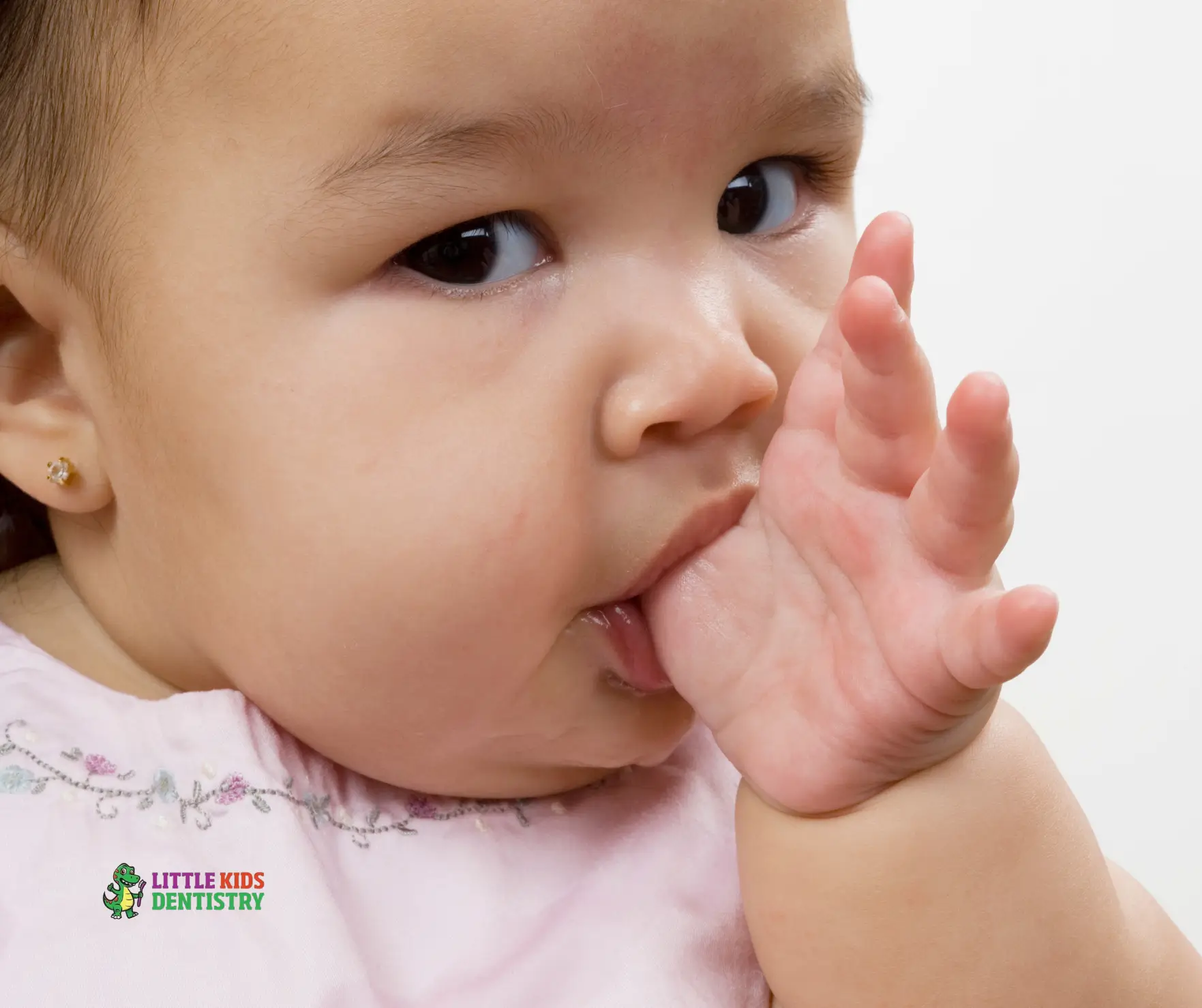
Thumb sucking and pacifier use can become one of the biggest debates among parents of babies and toddlers.
Should you allow a pacifier?
When should you take it away?
Will thumb sucking make your child’s teeth crooked?
And what happens if your toddler absolutely refuses to stop?
The good news is that sucking behaviors are normal during infancy and early childhood. The bigger concern is usually how long and how intensely the habit continues as a child grows.
Why Do Babies Suck Their Thumbs or Use Pacifiers?
Sucking is a natural reflex for infants.
For many children, sucking provides comfort and helps them settle when tired, anxious, or upset.
Pacifiers can serve a similar soothing purpose.
The American Academy of Pediatric Dentistry recognizes that pacifier use may provide benefits during infancy and supports parents making decisions based on their baby’s individual needs.
So parents generally don’t need to panic simply because their baby enjoys a pacifier or sucks their thumb.
The dental conversation becomes more important when these behaviors continue for a prolonged period.
How Can Long-Term Sucking Affect Teeth?
When a child repeatedly places a thumb, finger, or pacifier between developing teeth, prolonged pressure can influence how the teeth and jaws grow.
Depending on the intensity and duration of the habit, changes may develop in the child’s bite or tooth position.
For example, the upper front teeth may move outward, or the front teeth may not meet normally when the child bites down.
Not every child who uses a pacifier develops orthodontic problems.
Frequency, duration, intensity, genetics, and growth all play a role.
AAPD guidance considers non-nutritive sucking normal in young children while recognizing that long-term habits can influence developing teeth and bite relationships.
Pacifier vs. Thumb Sucking
Parents sometimes ask which habit is “better.”
From a practical perspective, pacifier use has one major advantage:
Eventually, parents can remove the pacifier.
You can’t remove a child’s thumb.
That means persistent thumb sucking can sometimes be harder to stop.
However, forcing a child to quit either habit abruptly can create unnecessary stress.
For many families, gradual reduction works better.
How Can Parents Help Kids Stop?
Start by identifying when your child uses the pacifier or sucks their thumb.
Is it throughout the entire day?
Only while sleeping?
When nervous?
While watching television?
Understanding the trigger makes changing the behavior easier.
For pacifiers, parents can gradually limit use to specific situations.
For example, you might move from:
“Pacifier anytime”
to
“Pacifier only at home”
and eventually
“Pacifier only at bedtime.”
Praise works better than shame.
Instead of saying, “Big kids don’t suck their thumb,” try acknowledging moments when your child doesn’t use it.
Creating a small reward system can also work well for older children who understand the goal.
Most importantly, avoid embarrassing or punishing your child.
These habits are often connected to comfort, not misbehavior.
When Should You Talk to a Pediatric Dentist?
You don’t have to wait until you notice visibly crooked teeth.
Your child’s pediatric dentist can monitor how the teeth and jaws are developing during routine appointments.
If the habit continues as your child grows, your dentist can tell you whether it’s beginning to influence the bite and help your family develop an appropriate strategy.
This is another reason regular dental appointments during early childhood matter.
Changes can often be identified long before parents would notice them at home.
Every Child Is Different
There isn’t one perfect day when every child must suddenly give up a pacifier or stop sucking their thumb.
Development happens differently for every child.
The best approach combines patience with professional guidance and attention to how the habit affects your child’s developing mouth.
At Little Kids Dentistry, we help families understand what’s normal, what deserves attention, and what steps may help protect their child’s growing smile.
If you’re concerned about your child’s pacifier or thumb-sucking habit, bring it up during their next dental visit.
Sometimes a little guidance now can help prevent a much bigger dental concern later.